

When Your Child Is Hurt by a Friend: Be the Listener, Not the Fixer
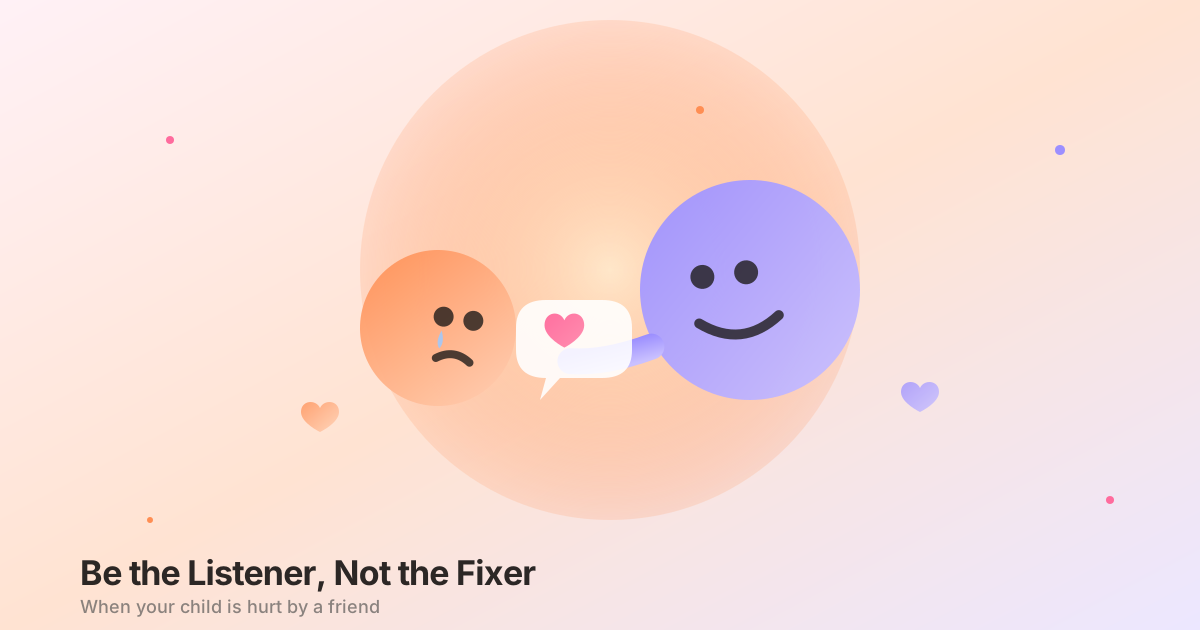
Halfway through dinner, your child blurts it out. "Mia didn't play with me today." The spoon goes down, and their face clouds over. Your heart drops right along with it. And almost on reflex, your mouth gets there first. "Why? What happened? Well, why didn't you play with someone else?" "Did you ask her nicely?" "You don't need friends like that anyway."
It came from love — you wanted the hurt gone, fast. But here's the strange part: after all that pours out, your child goes quiet. "Never mind," they say, and disappear into their room. You were trying to help, and somehow they feel further away. What went wrong?
The trouble is that we leapt into being the fixer too fast. When a child is hurting over a friend, what they need isn't someone handing them a solution. It's someone who will simply listen.

Why advice pushes a hurting child away
First, a little reassurance for us. The fact that your child told you about a friendship problem at all is a good sign. They didn't come looking for a solution — they came looking for a safe place to set the feeling down. And when we rush in with advice, two things happen from the child's side.
First, the hurt gets skipped over instead of acknowledged. "Just play with someone else" lands in a kid's ears as the sadness you're feeling right now isn't a big deal. When sadness goes unacknowledged, a child has nowhere to put it. So they close up.
Second, a quiet judgment sneaks in. "Did you ask her nicely?" is meant as a helpful question, but to a hurting child it can sound like isn't this your own fault for not trying harder? If you come for comfort and get evaluated instead, next time you just won't bring it up at all.
The psychologist John Gottman, well known for his work on emotion coaching, found that the parental response that helps a child's emotional development most isn't the one that minimizes the feeling or rushes to fix it. It's the one that treats the feeling as a chance to connect — staying with it first. Gottman called this "emotion coaching," and the order is everything: you fully hear and name the feeling before you ever move to problem-solving.
There's a brain reason, too. A child flooded by emotion is in no state to take in logical advice. Psychiatrist Dan Siegel captures it as connect and redirect — connection first, guidance second. Lead with the fix (redirect) while a child is still churning and it simply won't land. The calming of connection has to come first; the advice comes after.
Five ways to be the listener instead of the fixer
1. Pause, and take in the feeling first
Your first move isn't to speak — it's to pause for a beat. Set the solution that just popped into your head off to the side. Then reflect the feeling back, plainly.
"It really hurt that Mia didn't play with you today." "Oh, sweetheart… that kind of thing stings."
There's no judgment here, and no fix. Just the signal: I see how you feel. Surprisingly, this one sentence loosens a child's shoulders. The moment a feeling is acknowledged is the moment a child has room to say more.
2. Don't interrogate — follow and listen
Firing off "Why? Who? How did it start?" at a hurting child turns comfort into a cross-examination. Ask fewer questions, and instead gently echo back what they've offered, following their lead.
Child: "Mia only played with someone else." Parent: "She was just playing with the other person. And you were watching from the side?"
Simply catching the tail end of what your child says tells them, it's safe to keep going. The one steering the conversation should be your child, not you. Our job is to stay beside them and not lose the thread.
3. When you want to advise, ask permission first
If there's something you really want to say, don't just launch into it — check first.
"Want to hear what I think? Or do you just want me to listen some more?"
That one question changes a lot. If your child says "just listen," it means they're not ready for a solution yet. If they say "yeah, tell me," now the advice can land. Advice only helps when it reaches a heart that's ready to receive it. More than that, the question tells your child: you're the owner of your feelings.
4. Don't get angry or judge on their behalf
Hearing that your child was hurt by a friend lights a fire in you first. "Why would she do that? Don't play with her anymore." But when a parent brands the friend as "the bad kid," it leaves the child in a bind two ways. One, they may still like that friend, which now feels complicated and confusing. Two, next time they'll hide the hurt to avoid setting you off.
"That friend is just a mean kid." (✗) "Sounds like things didn't go well between you two today. That really stung, huh." (✓)
Stay with the situation and the feeling, but don't pin a label on the person. That's what lets a child keep opening up without fear.
5. Find the solution with your child
Once the feeling has settled and your child wants to, then think about what's next — together. Even here, stand beside them with questions rather than handing over an answer.
"So what do you want to do now?" "When you see Mia tomorrow, what would feel easiest for you?"
A plan a child comes up with themselves gets followed far more reliably than one a parent assigns. The more they practice solving their own problems, the steadier they'll be at the next conflict. Our goal was never to fix today's problem for them — it's to build the problem-solving muscle they'll use for life.

If the friendship hurt has tipped into a full-blown meltdown, you may need to help that feeling settle before any of this can land. We covered that in-the-moment first step in When Your Child Is Angry, the One Thing to Do First.
How Kids&Coo helps you build the habit of listening first
Being the listener instead of the fixer is hard, not because we're too busy, but because we love them — we want the hurt gone the instant we see it. The evening Coo Time conversation in Kids&Coo carves out one moment a day to just listen, without trying to fix. Following the feeling your child logged that day, you ask, "Did anything upset you today?" — and practice taking the answer in without grading it, one small time, every day.
Today, start with one thing
Next time your child is hurting over a friend, swallow the solution in your head just once. Try this instead: "Oh, that really hurt, didn't it. Tell me more?" That single sentence — holding the fix and listening first — gives your child the biggest reassurance of all: there's someone here I can bring my feelings to.
— Kids&Coo
Related posts

Beyond 'How Was School?' — Questions That Actually Get Your Child Talking After School
You meet them at pickup, ask 'How was school?' — and all you get back is 'I don't know' or 'Fine.' When the after-school conversation ends in a single word every time, it isn't because your child is shutting you out. Here's why questions right after school fall flat, and five concrete ways to actually get your child talking.

Stop Saying "Good Job" — Praise That Makes Kids More Resilient
"Good job!" "You're so smart!" — well-meant praise can quietly make a child more fragile. Here's how to praise effort and strategy instead of talent and results, grounded in growth-mindset research, with before-and-after scripts you can use today.

The Complete Guide to Emotion Coaching — Raising a Child Who Can Name and Handle Big Feelings
When your child melts down in tears, you reach for the fastest fix — solve it, shut it down, or distract them onto something else. But that very moment is where the deepest growth happens. John Gottman's five steps of emotion coaching, how a child's brain actually works, age-by-age approaches — everything you need to raise a child who can handle big feelings, in one place.
Try Kids&Coo
A daily emotional check-in that turns into a meaningful conversation with your child.
Download on Google Play